
Why French is a good next language for Arabic speakers
This guide shows how to learn French for Arabic speakers who need it for travel, study, work with French-speaking partners or helping children with school French. The good news is that you do not start from zero. Arabic and French are very different languages, but several things that make French hard for English speakers feel natural to an Arabic speaker.
French is also part of daily life in many Arabic-speaking places. In Lebanon, Morocco, Algeria and Tunisia, words like "merci" and "bonjour" are heard every day, and Egyptian Arabic uses French-origin words such as جاتوه (gâteau, cake). If you also speak some English, you get a second advantage: thousands of French words look like English words, such as "important", "possible", "information" and "restaurant".
What is easier for Arabic speakers
These are the parts of French where your Arabic gives you a head start.
The French r
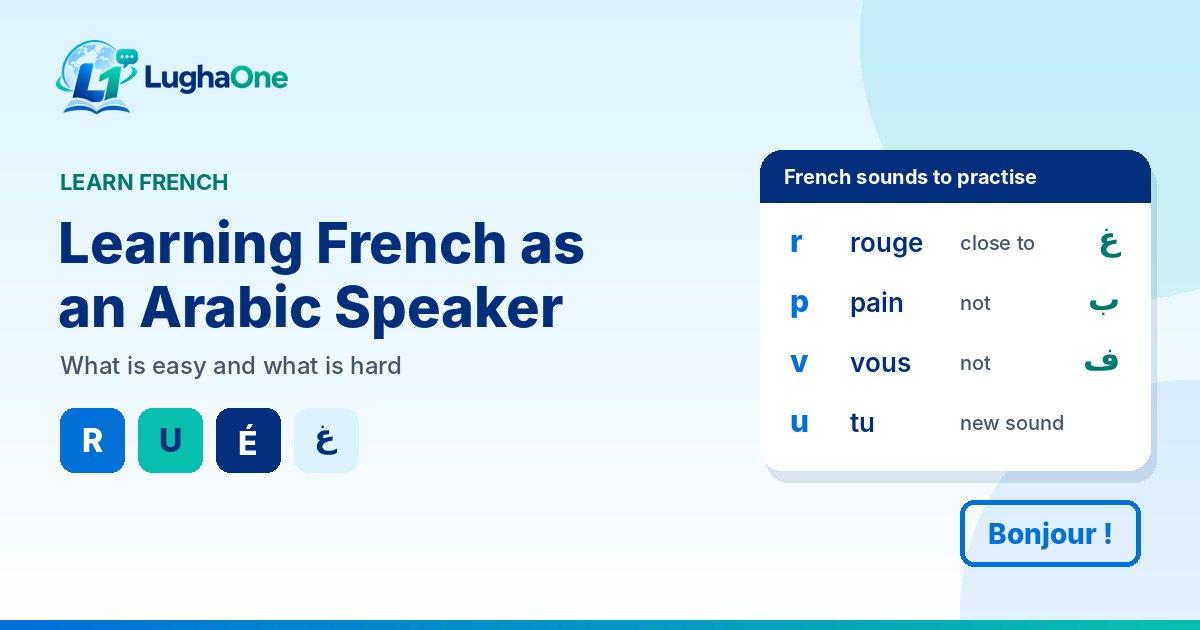
The French r is made at the back of the mouth, and for many speakers it sounds close to the Arabic غ (ghayn). English speakers often struggle with it for months; Arabic speakers can usually say "rouge" (red), "Paris" or "merci" well very early. Start from a soft غ and make it lighter.
Masculine and feminine nouns
Arabic speakers already think in masculine and feminine, so French gender does not feel strange. Every French noun is masculine or feminine, and the article shows it: "le livre" (the book, masculine), "la maison" (the house, feminine).
Be careful: the gender is often different from Arabic. "Le soleil" (the sun) is masculine in French but الشمس is feminine in Arabic, and "la lune" (the moon) is feminine in French while القمر is masculine. Learn every noun together with its article.
Adjectives after the noun
Like Arabic, French usually puts the adjective after the noun, and the adjective agrees with it: "une voiture rouge" (سيارة حمراء), "un livre intéressant" (كتاب ممتع). A few short, common adjectives such as "grand", "petit", "bon" and "nouveau" come before the noun: "un petit café".
Words you may already know
French borrowed a number of words that go back to Arabic, sometimes through other languages. "Algèbre" comes from الجبر, "chiffre" (digit) from صفر, "sucre" (sugar) from سكر and "magasin" (shop) from مخازن. Spotting these connections makes vocabulary more memorable.
What is harder: French pronunciation for Arabic speakers
Modern Standard Arabic has three short and three long vowels, while French has many more vowel sounds. Most of the work for Arabic speakers is in the vowels and in a few consonants that do not exist in Arabic.
- P and B: "pain" (bread) and "bain" (bath) are different words. Hold your hand in front of your mouth: p has a small puff of air, b does not.
- V and F: "vous" (you) and "fou" (crazy) are different too. For v, touch your top teeth to your lower lip and let your voice vibrate.
- The French u: in "tu" (you) or "rue" (street), say "ee" and round your lips as if you were saying "oo". It is different from "ou" in "tout" (all) or "roue" (wheel).
- E sounds: "é" in "café", "è" in "mère" (mother) and the short "e" in "le" are three different sounds. Learn them in whole words, not as letters.
- Nasal vowels: "on" in "bon" (good), "an/en" in "dans" (in) and "in" in "vin" (wine) are said partly through the nose, without a full n at the end.
Silent letters and linking
Many final letters in French are written but not pronounced: the s in "Paris", the t in "petit" and the ent in "ils parlent" (they speak) are silent. Sometimes a silent consonant is pronounced when the next word starts with a vowel, which is called liaison: "les amis" (the friends) sounds like "lé-z-ami". Listening a lot, especially to slow audio, is the best way to get used to this.
What is harder: French grammar for beginners
French grammar is regular in many ways, but a few points need attention from the start.
- Articles everywhere: French uses "le, la, l', les" (the) and "un, une, des" (a, some) far more than Arabic uses ال, and they change for gender and number.
- Verb endings: verbs change with the person, like Arabic. The tricky part is that many endings are written but sound the same: "je parle, tu parles, il parle, ils parlent" are all pronounced "parl".
- Tu and vous: "tu" is for friends, family and children; "vous" is for strangers, older people, customers and anyone you want to show respect, and also for more than one person. When in doubt, use "vous".
- Negation in two parts: "je ne parle pas" (I do not speak). In everyday speech the "ne" often disappears: "je parle pas".
How to learn French for Arabic speakers: a plan for your first weeks
You do not need to master grammar before you speak. A short, regular routine works better than long sessions once a week.
- Week 1: greetings and survival phrases: "Bonjour", "Merci", "S'il vous plaît", "Je m'appelle...", "Je ne comprends pas", "Vous parlez anglais ?".
- Week 2: numbers, days and times, and the verbs être (to be) and avoir (to have).
- Week 3: food, shopping and directions, always learning nouns with le or la.
- Week 4: talk about yourself in five or six simple sentences and record yourself saying them.
- Every day: 10 to 15 minutes of listening, a few minutes of saying words aloud, and a quick review of saved words.
Learn French with LughaOne
French is one of the 20 languages you can study on LughaOne, across 26 learning tracks with 2,340 reviewed A1 and A2 lessons. Listen to each lesson at normal or slow speed, which helps a lot with silent letters and linking, save useful words, and review them with flashcards, quizzes and review sessions. The AI tutor answers your questions about each lesson.
French is also one of the languages with pronunciation practice: you get AI accuracy and fluency scores for words like "rue", "vous" and "pain", and your pronunciation history shows how you improve. Everything is included in the 3-day free trial, no card needed, and family plans cover up to six accounts.
Keep exploring
Family Learning
Learning a Language as a Family: Ideas That Actually Work
Learning a new language together can be one of the best family projects you start this year, as long as you keep it short, playful and built into the routines you already have.
Career English
English for Customer Service Jobs: Phrases That Sound Professional
Good customer service English is not about long words. It is about a small set of polite, clear phrases you can use every day in shops, hotels, restaurants and help desks.
Chinese for beginners
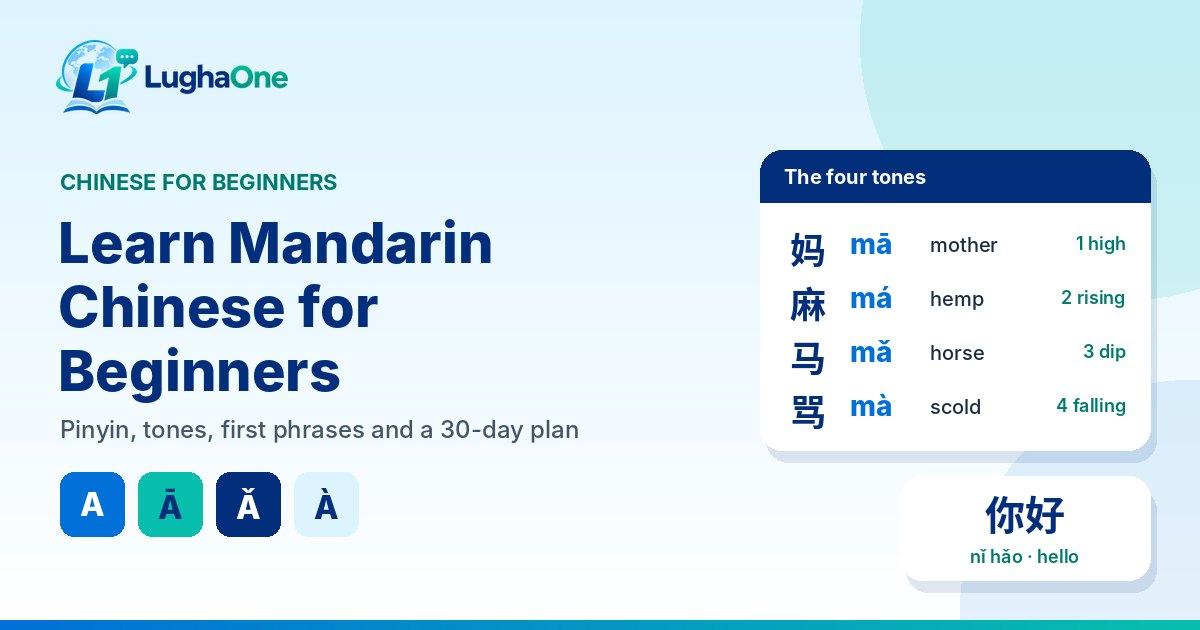
Learning Mandarin Chinese: A Realistic Starting Plan for Beginners
Mandarin looks impossible from the outside, but the first month is very manageable if you start in the right order: pinyin and tones first, then survival phrases, simple sentence patterns and your first characters.
Business English
English Meeting Phrases: Agree, Disagree and Suggest Politely
Ready-to-use English for meetings in the office or on video calls: how to open, agree, disagree without sounding rude, suggest ideas, interrupt politely and close with clear next steps.
Business English
English Phone Call Phrases: Bookings, Support and Work Calls
Phone calls are harder than face-to-face English: no gestures, no lips to read, and the other person is waiting. These ready-to-use phrases for work calls, bookings and customer support help you sound calm, clear and polite.
Study Skills
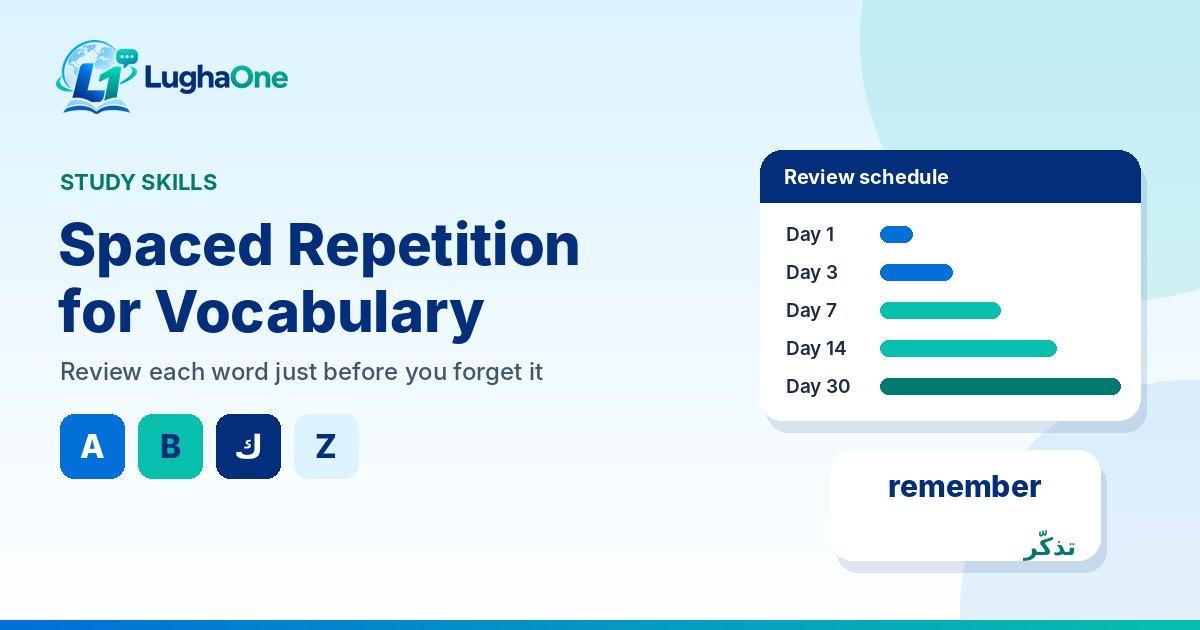
Spaced Repetition: Remember New Vocabulary for Longer
You learn twenty new words on Monday and remember five by Friday. Spaced repetition fixes that: review each word just before you would forget it, at growing intervals. Here is how it works and how to use it with paper or an app.
Family Learning
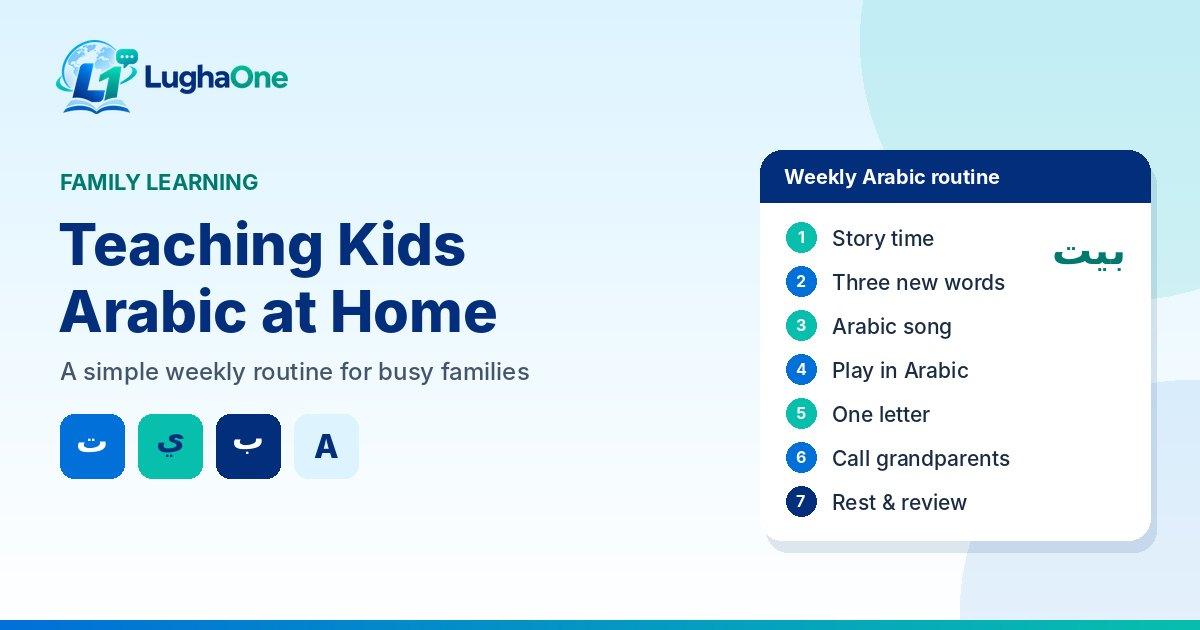
Teaching Kids Arabic at Home: A Simple Weekly Routine
A practical plan for Arab families abroad and mixed families: short daily Arabic moments, a seven-day routine, how to handle dialect and Modern Standard Arabic, and how to keep going when your child answers in English.
Learning Tips
How AI Can Help You Practise Speaking a New Language
Speaking is the skill most learners practise least. Here is what AI speaking practice can and cannot do, a simple 20-minute routine, ready-to-use role-play prompts and tips for Arabic speakers learning English.
Business English
English Small Talk at Work: Natural Phrases for the Office
Short, natural English for the moments before meetings, in the lift and at the coffee machine: how to start, what to talk about, how to keep it going and how to leave politely.
Learn Arabic
The Arabic Alphabet for Beginners: Letters, Shapes and Sounds
Learn to read Arabic step by step: how the script works, the 28 letters grouped by shape, how letters change at the start, middle and end of a word, vowel marks and a two-week practice plan.
Learning Tips
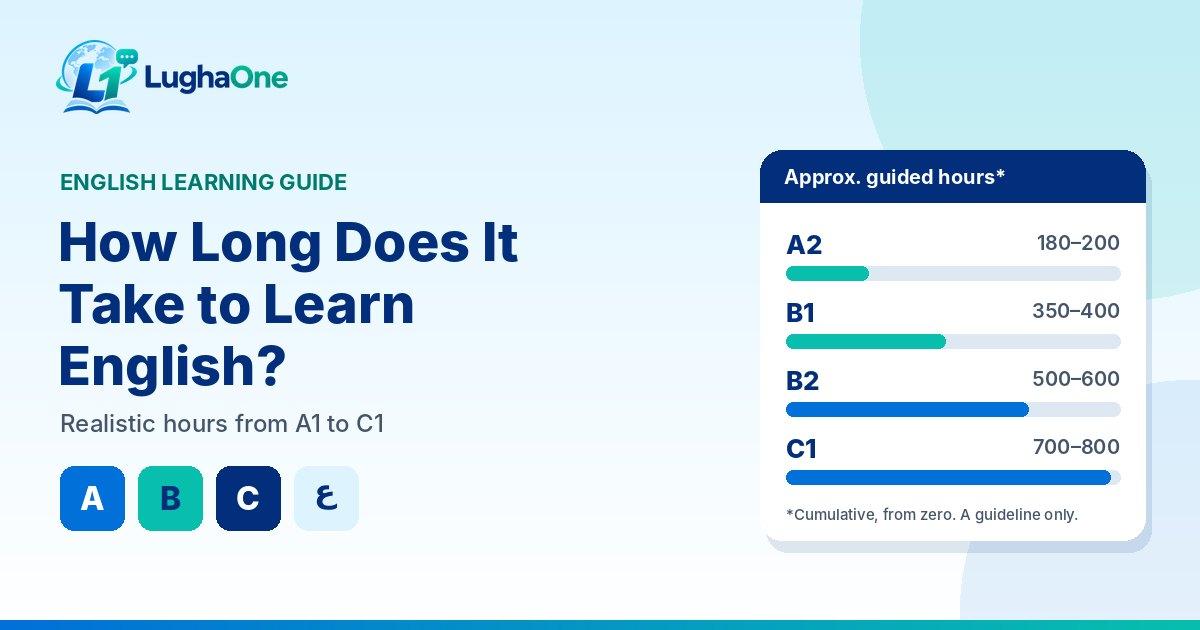
How Long Does It Take to Learn English? A Realistic Answer
A realistic answer in hours, not promises: approximate study time for each level from A1 to C2, the factors that change it, and simple weekly plans for busy learners.
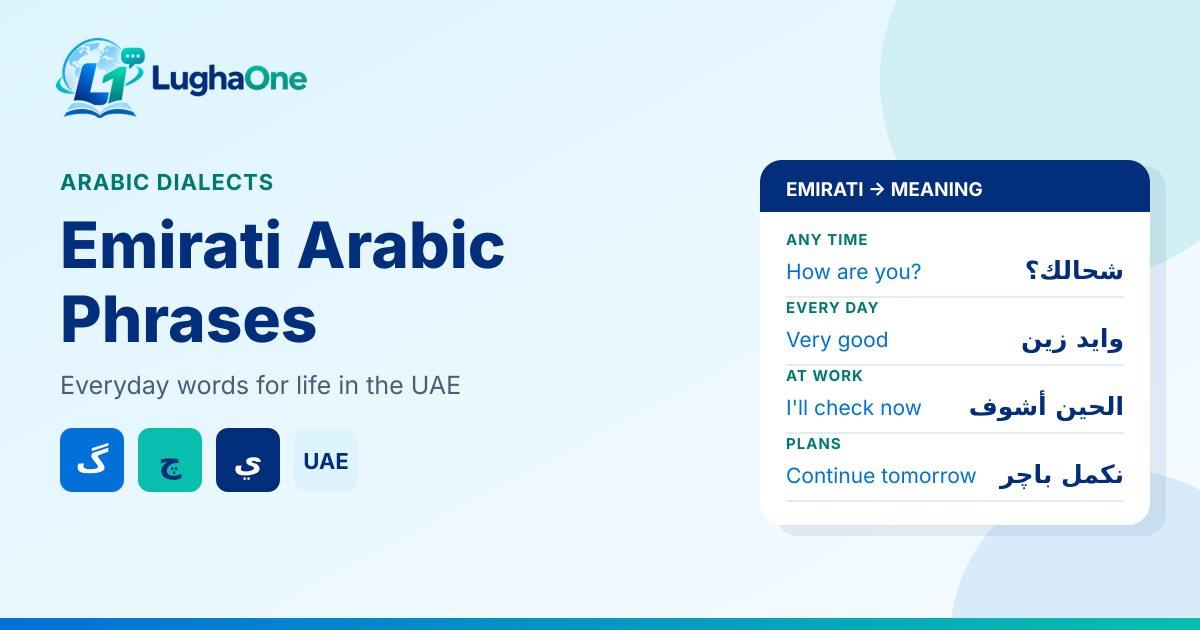
Arabic Dialects
Emirati Arabic Phrases for Everyday Life in the UAE
The Emirati words and phrases you will actually hear in Dubai, Abu Dhabi and Sharjah: how the dialect sounds, everyday words, office and shop phrases, directions for taxis and Emirati hospitality.
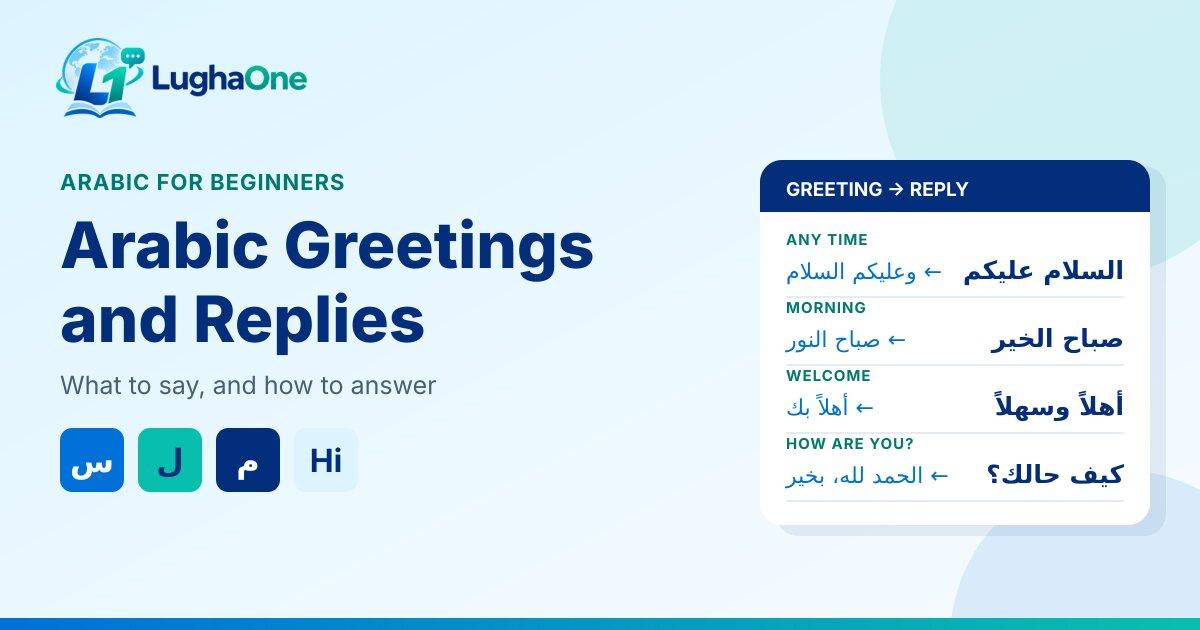
Arabic for Beginners
Arabic Greetings and Responses: What to Say and How to Reply
In Arabic, almost every greeting has a set reply. Learn the pairs for every time of day, how to ask how are you across the region, what to say on Ramadan and Eid, and the etiquette that goes with them.
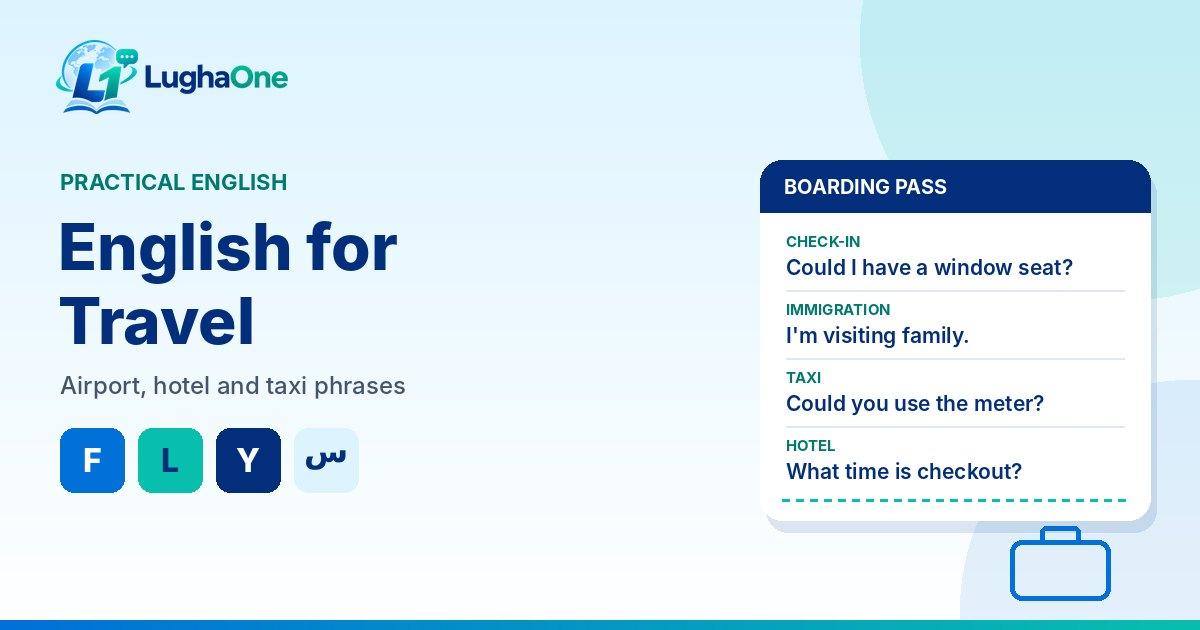
Practical English
English for Travel: Airport, Hotel and Taxi Phrases You Will Actually Use
The English you need from the check-in desk to your hotel room: short, polite phrases for every step of the trip, the questions officers ask, and easy fixes for common mistakes.
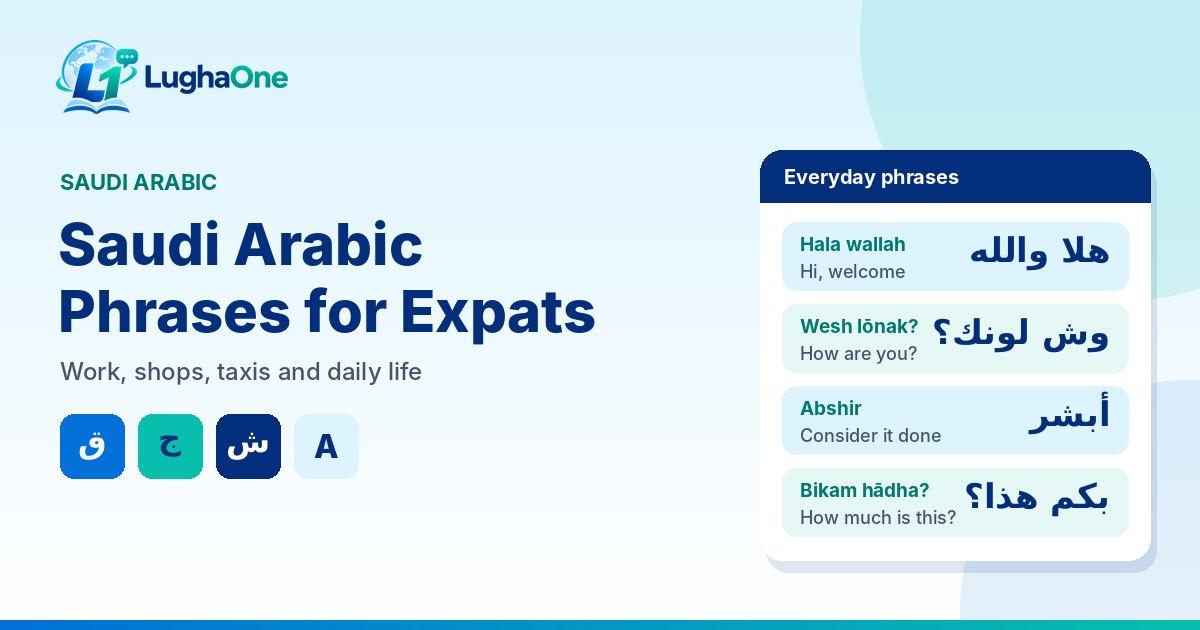
Arabic Dialects
Saudi Arabic Phrases for Expats: Work, Shops and Daily Life
The everyday Saudi Arabic you will hear in Riyadh, Jeddah and beyond, from hala wallah and abshir to bikam hadha, with simple notes on Najdi and Hijazi speech.
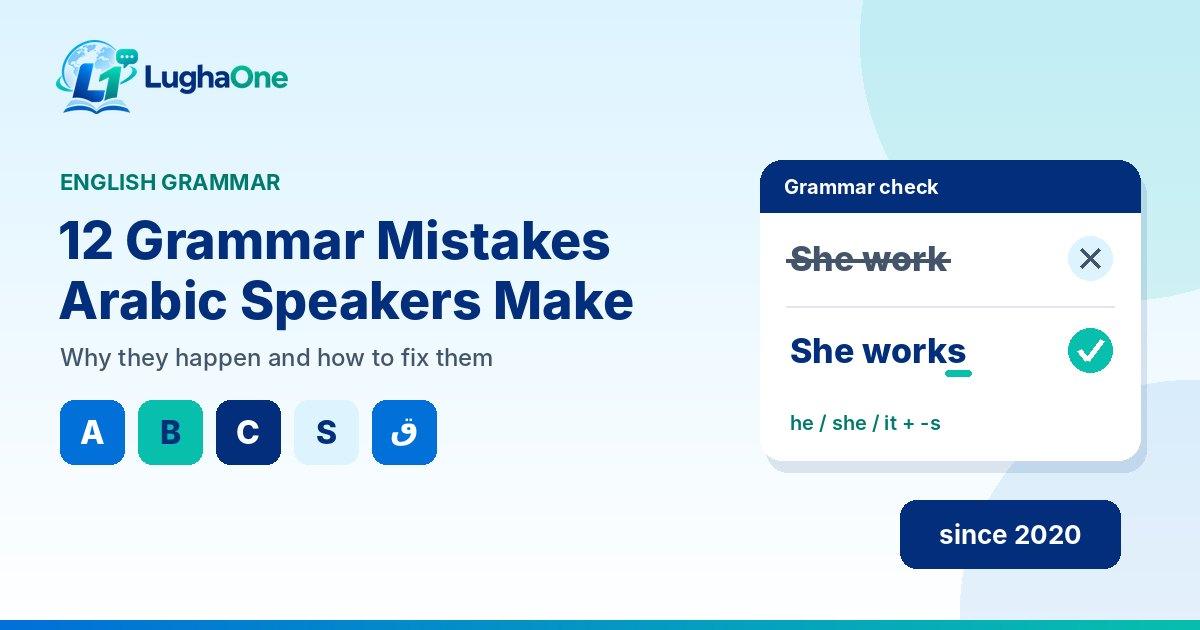
English Grammar
12 English Grammar Mistakes Arabic Speakers Make (and How to Fix Them)
Twelve grammar mistakes that come from thinking in Arabic while speaking English, why each one happens, and a simple correction you can start using today.
Business English
Business English Email Phrases: How to Write Clear, Professional Emails at Work
Ready-to-use phrases for every part of a work email, from the greeting to the sign-off, with a sample email you can adapt and the small mistakes that make emails sound less professional.
Business English
English Job Interview Questions and Answers: A Guide for Arabic Speakers
How to answer 'Tell me about yourself', 'Why should we hire you?' and other common interview questions in clear, confident English, with sample answers you can adapt.
Pronunciation
English Pronunciation for Arabic Speakers: Fix P/B, V/F and More
Why 'parking' turns into 'barking' and 'very' into 'fery', and simple daily drills that make your English clearer in meetings, interviews and travel.
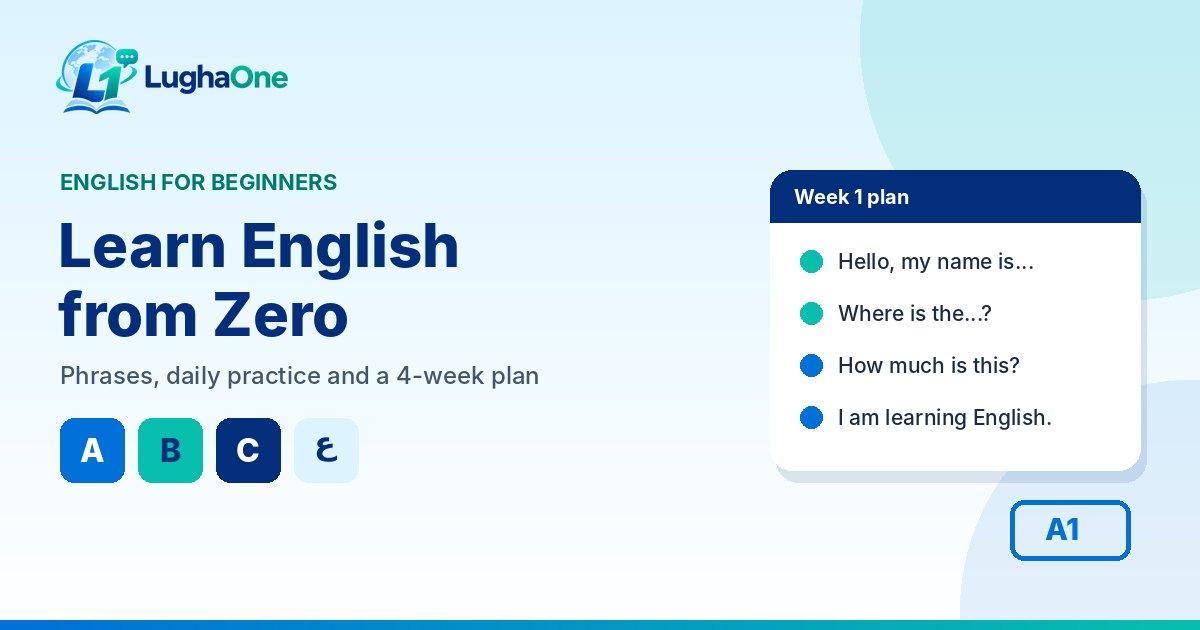
English learning
How to Learn English from Zero: A Practical Beginner's Guide
Start speaking with confidence: the first phrases to learn, a 15-minute daily routine, beginner mistakes to avoid and a simple four-week plan.
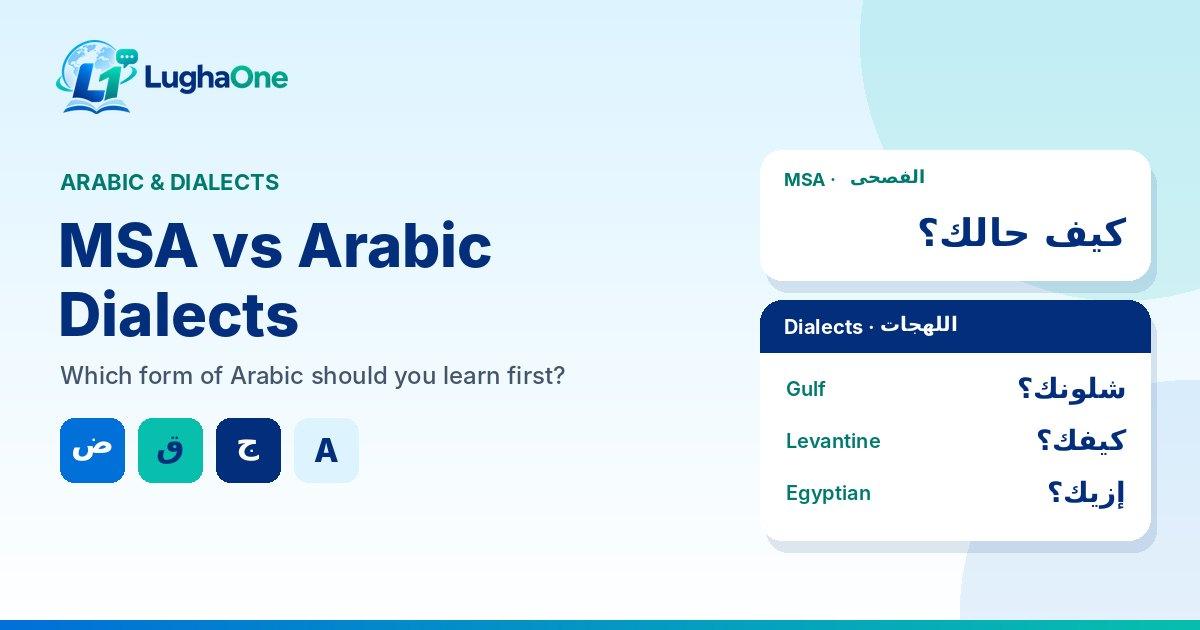
Arabic & dialects
Modern Standard Arabic vs. Arabic Dialects: Where Should You Start?
MSA or spoken Arabic? See how they differ in real examples, from 'How are you?' to the letter qaf, and choose the path that fits your goals.