
Is it worth starting to learn Mandarin?
If you want to learn Mandarin for beginners in a way that actually lasts, the first thing to know is that the start is easier than its reputation. Mandarin has no verb conjugations, no plural endings and no grammatical gender. What makes it different are the tones and the writing system, and both become manageable when you take them one step at a time.
Interest in Chinese has grown across the Gulf. The UAE launched a programme to teach Chinese in public schools in 2019, and Saudi Arabia has also introduced Chinese classes in its schools. Many families now hear Mandarin at home through their children's homework, and many professionals meet it through trade, tourism and work with Chinese companies.
Be realistic about the long road: the US Foreign Service Institute places Mandarin among the languages that take English-speaking diplomats the longest to learn, at around 88 weeks of full-time study for professional working ability. The good news is that you do not need professional ability to enjoy the language. Greetings, numbers, prices and a short self-introduction are well within reach in your first month.
Step 1: Pinyin, the key to reading Chinese sounds
Pinyin is the official system for writing Mandarin sounds with Latin letters. It is how dictionaries, textbooks and phone keyboards work, so learn it before anything else. Some letters sound almost like English, but several do not, and these cause most beginner mistakes.
Letters that do not sound like English
Learn these early so you do not build bad habits:
- q sounds like "ch" in "cheese" with a puff of air: qǐng (please).
- x sounds between "s" and "sh", with a smile: xièxie (thank you).
- j sounds like the "j" in "jeep" but softer: jiào (to be called).
- c sounds like "ts" in "cats", with a puff of air: cài (dish of food).
- zh, ch and sh are said with the tongue curled back: zhōng (middle), chī (eat), shì (to be).
- ü is like French "u": say "ee" and round your lips: nǚ (woman).
Good news for Arabic speakers
Some Mandarin sounds feel familiar. Pinyin h, as in hǎo (good), is pronounced further back in the throat than English h, close to a light Arabic خ. Arabic speakers also tend to hear the difference between sh and s easily.
Two habits to watch: the Mandarin r is not rolled like the Arabic ر (it is closer to the "r" in "run" or the "s" in "pleasure"), and the difference between b and p is a puff of air. P needs a clear burst of breath; b has none. If p is hard for you in English, practise it here too.
Step 2: Mandarin tones made simple
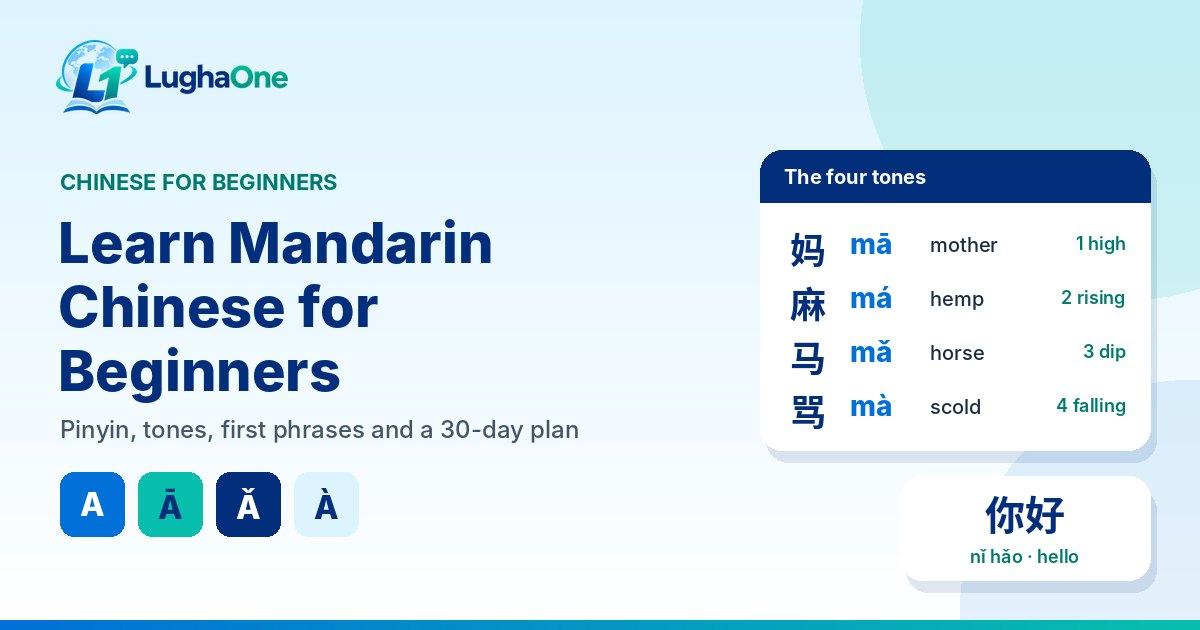
Mandarin tones change the meaning of a syllable, so they are not optional decoration. There are four main tones and a light neutral tone. The classic example uses the syllable ma:
- First tone (high and level): mā 妈 (mother).
- Second tone (rising, like a surprised "what?"): má 麻 (hemp).
- Third tone (low, dipping): mǎ 马 (horse).
- Fourth tone (sharp and falling, like a firm "no!"): mà 骂 (to scold).
- Neutral tone (short and light): ma 吗, the question word at the end of a yes/no question.
Two tone rules you will hear on day one
When two third tones come together, the first one is said as a second tone. That is why 你好 nǐ hǎo (hello) sounds like "ní hǎo".
The word 不 bù (not) changes to bú before a fourth tone: 不是 bú shì (is not), 不客气 bú kèqi (you're welcome).
How to practise tones
Learn tones in pairs of syllables, not one by one, because that is how you will hear them in real speech. Listen at slow speed first, copy the melody out loud, and exaggerate the pitch at the beginning. Use your hand to draw the tone in the air; it sounds strange, but it works for many learners.
Basic Chinese phrases for your first weeks
These basic Chinese phrases cover greetings, politeness and simple shopping. Learn them with their tones from the start:
- 你好 nǐ hǎo: Hello.
- 谢谢 xièxie: Thank you.
- 不客气 bú kèqi: You're welcome.
- 对不起 duìbuqǐ: Sorry.
- 没关系 méi guānxi: It's OK / No problem.
- 我叫… wǒ jiào…: My name is…
- 我是沙特人 wǒ shì Shātè rén: I am Saudi. (阿联酋人 Āliánqiú rén: Emirati.)
- 我住在迪拜 wǒ zhù zài Díbài: I live in Dubai.
- 多少钱? duōshao qián?: How much is it?
- 我不懂 wǒ bù dǒng: I don't understand.
- 请说慢一点 qǐng shuō màn yìdiǎn: Please speak more slowly.
- 再见 zàijiàn: Goodbye.
Simple Mandarin grammar that helps you start
Mandarin word order is often similar to English: subject, verb, object. 我喝茶 wǒ hē chá means "I drink tea". The verb never changes for the person or the tense: 我是 wǒ shì (I am), 他是 tā shì (he is) and 我们是 wǒmen shì (we are) all use the same 是.
To ask a yes/no question, add 吗 ma at the end: 你是老师吗? nǐ shì lǎoshī ma? (Are you a teacher?). Time words go before the verb: 我明天去 wǒ míngtiān qù (I'm going tomorrow).
Measure words are the main new idea. Between a number and a noun, Chinese adds a small word, most often 个 gè: 一个人 yí ge rén (one person). Learn each new noun with its measure word, the same way you would learn a French noun with its gender.
Chinese characters: where to begin
Mainland China and Singapore use simplified characters; Taiwan and Hong Kong use traditional characters. For most beginners, simplified characters are the practical first choice.
Do not try to memorise characters as random pictures. Many contain a component, called a radical, that hints at the meaning. 氵 (water) appears in 河 hé (river) and 海 hǎi (sea); 口 (mouth) appears in 吃 chī (eat) and 喝 hē (drink). Start with the characters in your first phrases, such as 你, 好, 我, 是 and 不, and review them with flashcards rather than copying long pages.
A realistic 30-day plan to start learning Chinese
Twenty minutes a day is enough for a strong start if you study every day. Here is one way to organise your first month:
- Days 1–7: Pinyin and tones. Listen at slow speed, repeat syllables aloud and practise tone pairs.
- Days 8–14: The phrases above. Say each one aloud, record yourself and compare with the audio.
- Days 15–21: Sentence patterns: 我是… (I am…), 我有… wǒ yǒu… (I have…), 我想要… wǒ xiǎng yào… (I would like…), …在哪里? …zài nǎlǐ? (Where is…?).
- Days 22–30: Your first 30 to 50 characters, a daily flashcard review and a short self-introduction you can say without reading.
Mistakes to avoid
- Ignoring tones because people "will understand from context". Fixing tones later is much harder.
- Learning only characters, with no listening or speaking.
- Studying for two hours on Friday and nothing for the rest of the week. Short daily sessions work better.
Learn Mandarin with LughaOne
Mandarin is one of the 20 study languages on LughaOne, which offers 2,340 reviewed A1 and A2 lessons across 26 learning tracks. You can listen at normal or slow speed, which is ideal while your ear is still learning the tones, then save new words and review them with flashcards, quizzes and review sessions. The AI tutor answers questions about each lesson.
Mandarin also includes pronunciation practice with AI accuracy and fluency scores, so you can practise phrases like 你好 and 谢谢 and follow your progress in your pronunciation history. Everything is included in the 3-day free trial, no card needed, and family plans cover up to six accounts.
Keep exploring
Family Learning
Learning a Language as a Family: Ideas That Actually Work
Learning a new language together can be one of the best family projects you start this year, as long as you keep it short, playful and built into the routines you already have.
Career English
English for Customer Service Jobs: Phrases That Sound Professional
Good customer service English is not about long words. It is about a small set of polite, clear phrases you can use every day in shops, hotels, restaurants and help desks.
Business English
English Meeting Phrases: Agree, Disagree and Suggest Politely
Ready-to-use English for meetings in the office or on video calls: how to open, agree, disagree without sounding rude, suggest ideas, interrupt politely and close with clear next steps.
Learn languages
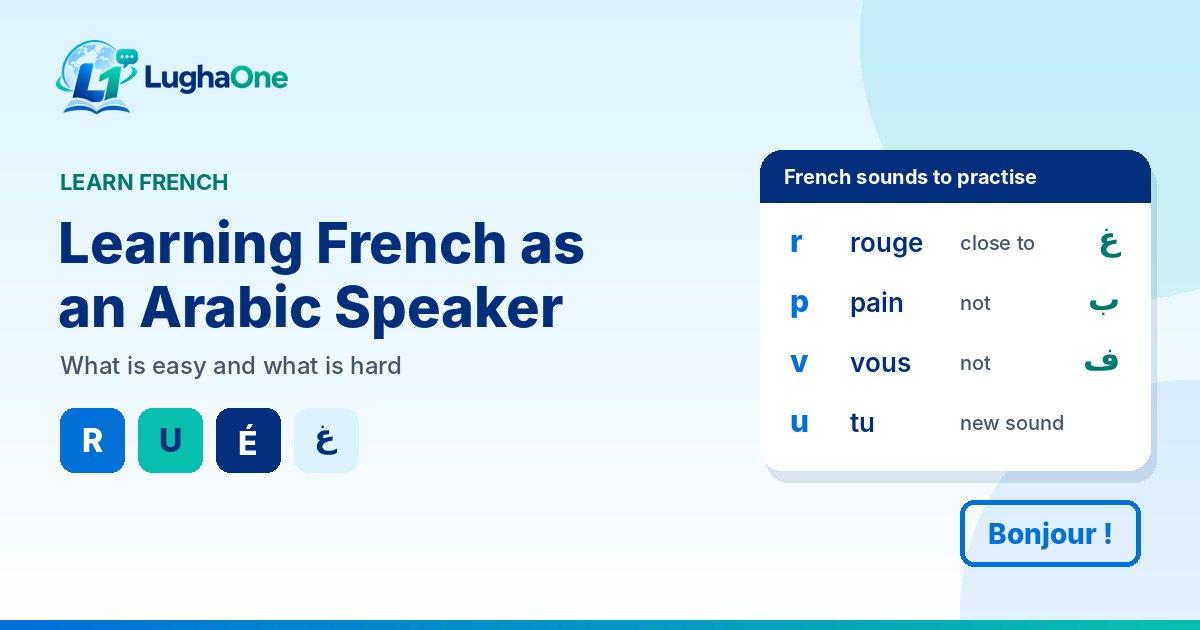
Learning French as an Arabic Speaker: What Is Easy and What Is Hard
Arabic speakers start French with more advantages than they think: the French r, grammatical gender and adjectives after the noun all feel familiar. Here is what comes easily, what takes practice, and how to start.
Business English
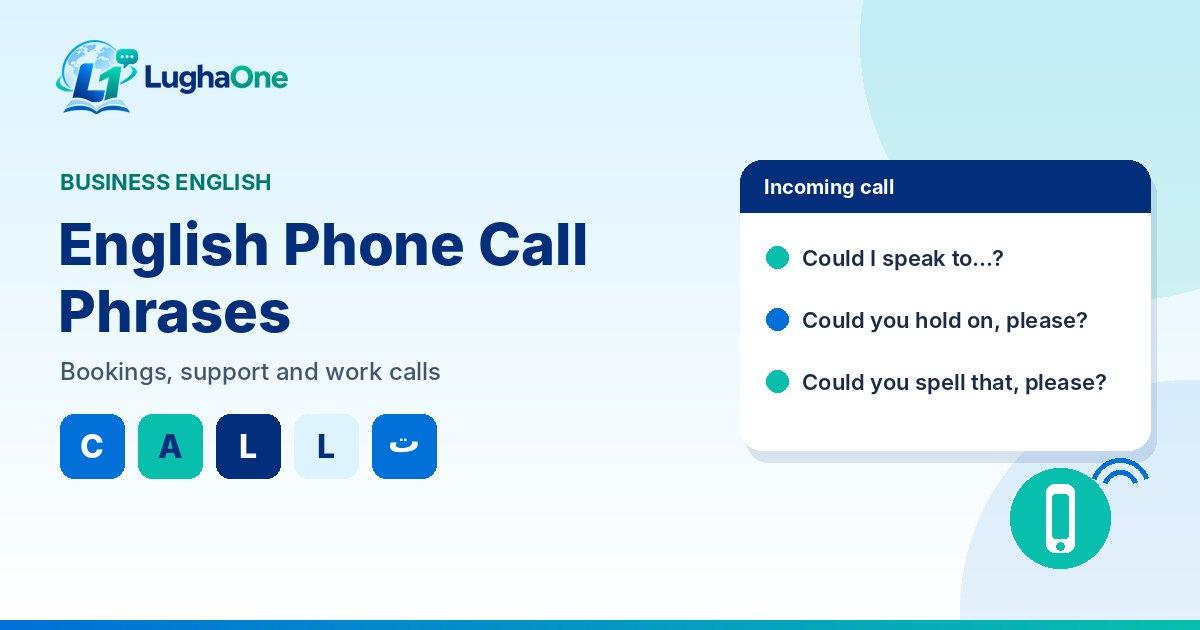
English Phone Call Phrases: Bookings, Support and Work Calls
Phone calls are harder than face-to-face English: no gestures, no lips to read, and the other person is waiting. These ready-to-use phrases for work calls, bookings and customer support help you sound calm, clear and polite.
Study Skills
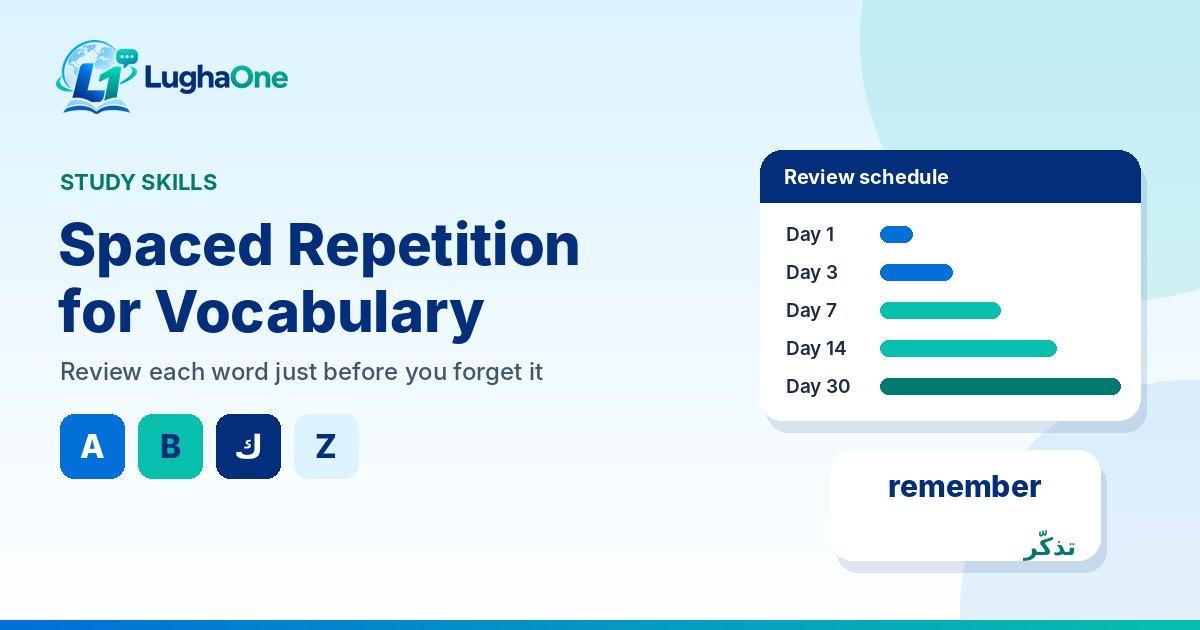
Spaced Repetition: Remember New Vocabulary for Longer
You learn twenty new words on Monday and remember five by Friday. Spaced repetition fixes that: review each word just before you would forget it, at growing intervals. Here is how it works and how to use it with paper or an app.
Family Learning
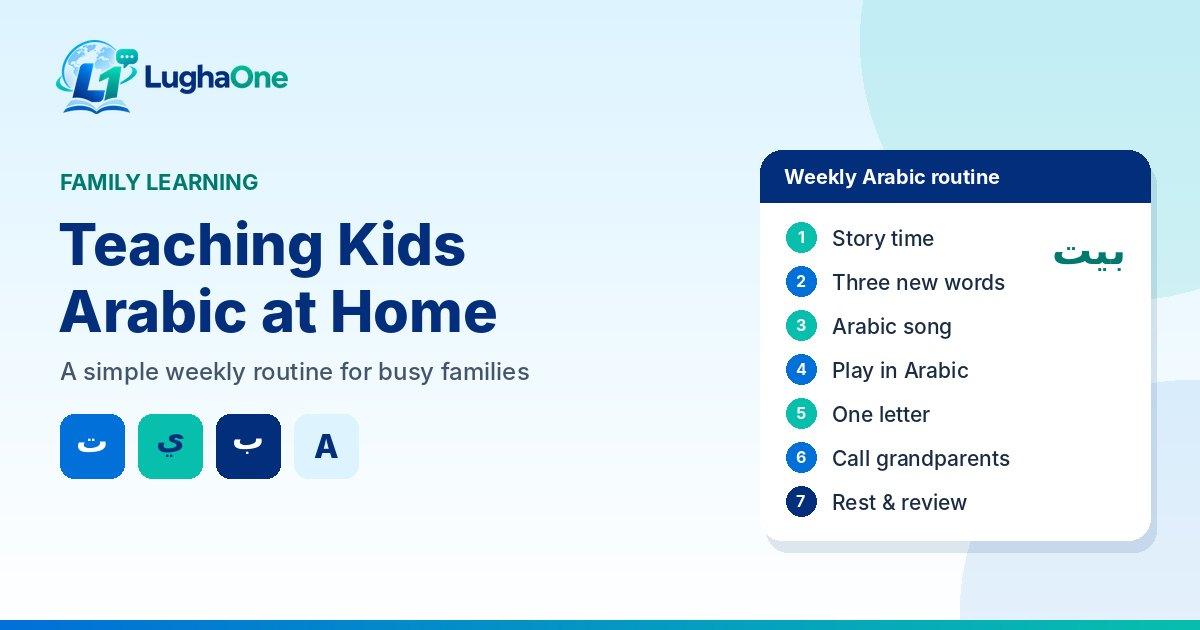
Teaching Kids Arabic at Home: A Simple Weekly Routine
A practical plan for Arab families abroad and mixed families: short daily Arabic moments, a seven-day routine, how to handle dialect and Modern Standard Arabic, and how to keep going when your child answers in English.

Learning Tips
How AI Can Help You Practise Speaking a New Language
Speaking is the skill most learners practise least. Here is what AI speaking practice can and cannot do, a simple 20-minute routine, ready-to-use role-play prompts and tips for Arabic speakers learning English.
Business English
English Small Talk at Work: Natural Phrases for the Office
Short, natural English for the moments before meetings, in the lift and at the coffee machine: how to start, what to talk about, how to keep it going and how to leave politely.
Learn Arabic
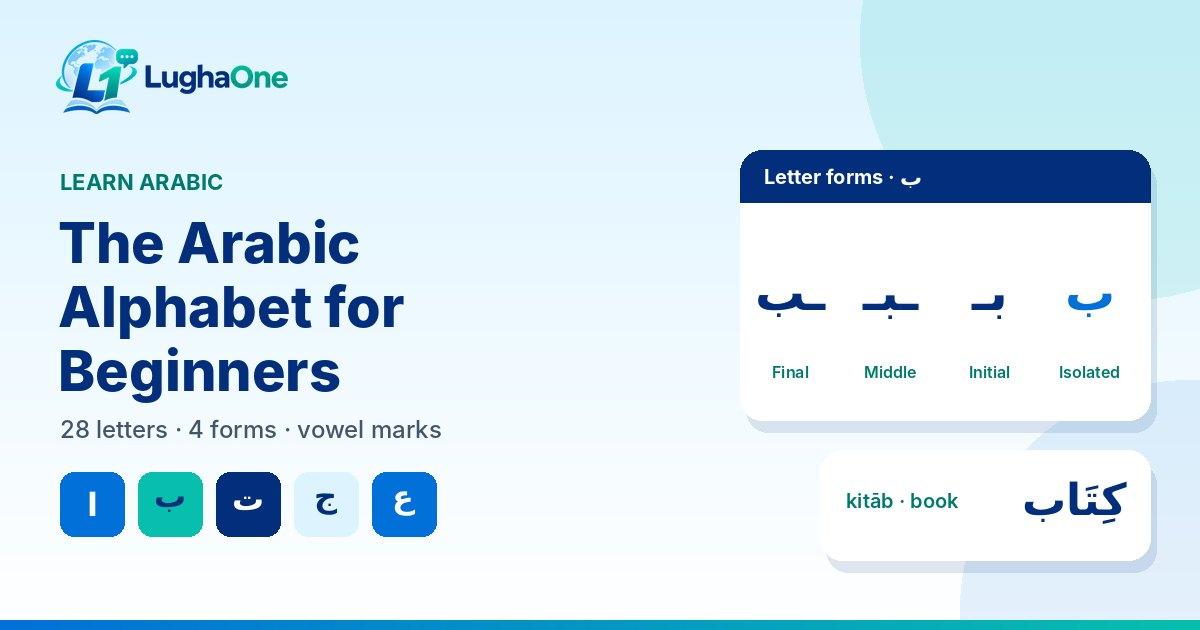
The Arabic Alphabet for Beginners: Letters, Shapes and Sounds
Learn to read Arabic step by step: how the script works, the 28 letters grouped by shape, how letters change at the start, middle and end of a word, vowel marks and a two-week practice plan.
Learning Tips
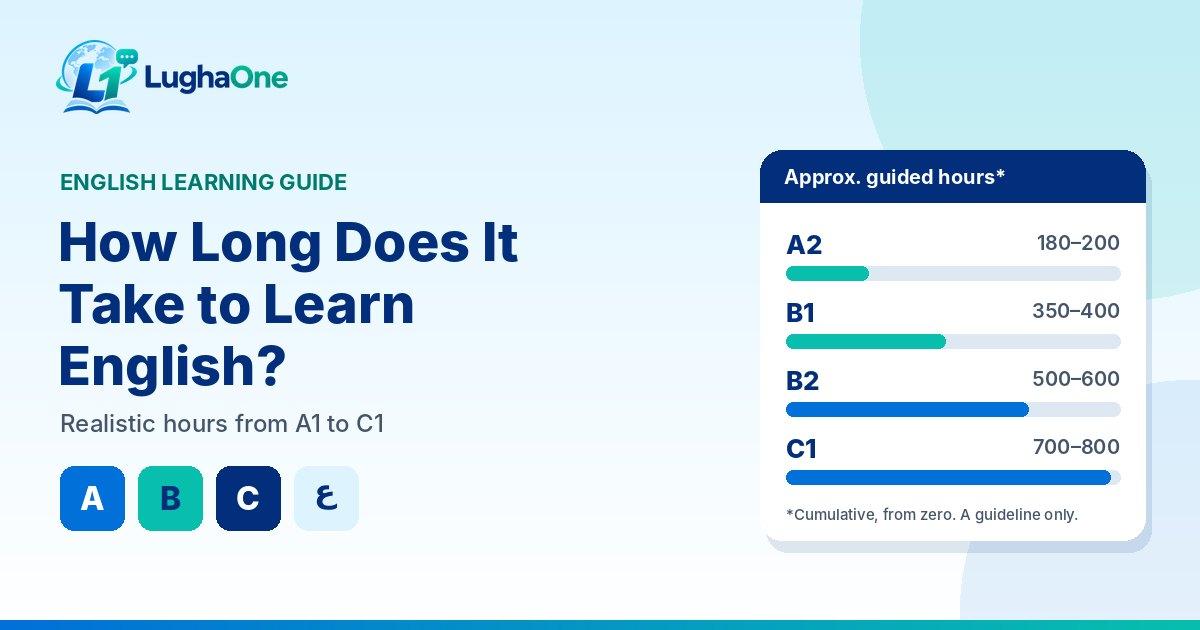
How Long Does It Take to Learn English? A Realistic Answer
A realistic answer in hours, not promises: approximate study time for each level from A1 to C2, the factors that change it, and simple weekly plans for busy learners.
Arabic Dialects
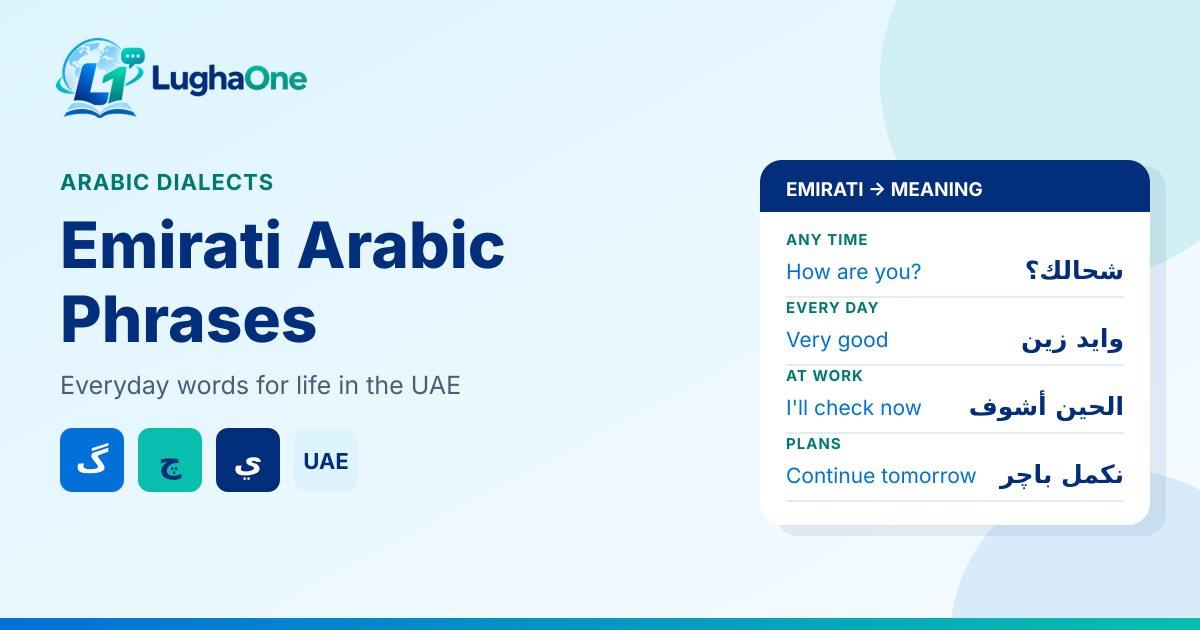
Emirati Arabic Phrases for Everyday Life in the UAE
The Emirati words and phrases you will actually hear in Dubai, Abu Dhabi and Sharjah: how the dialect sounds, everyday words, office and shop phrases, directions for taxis and Emirati hospitality.
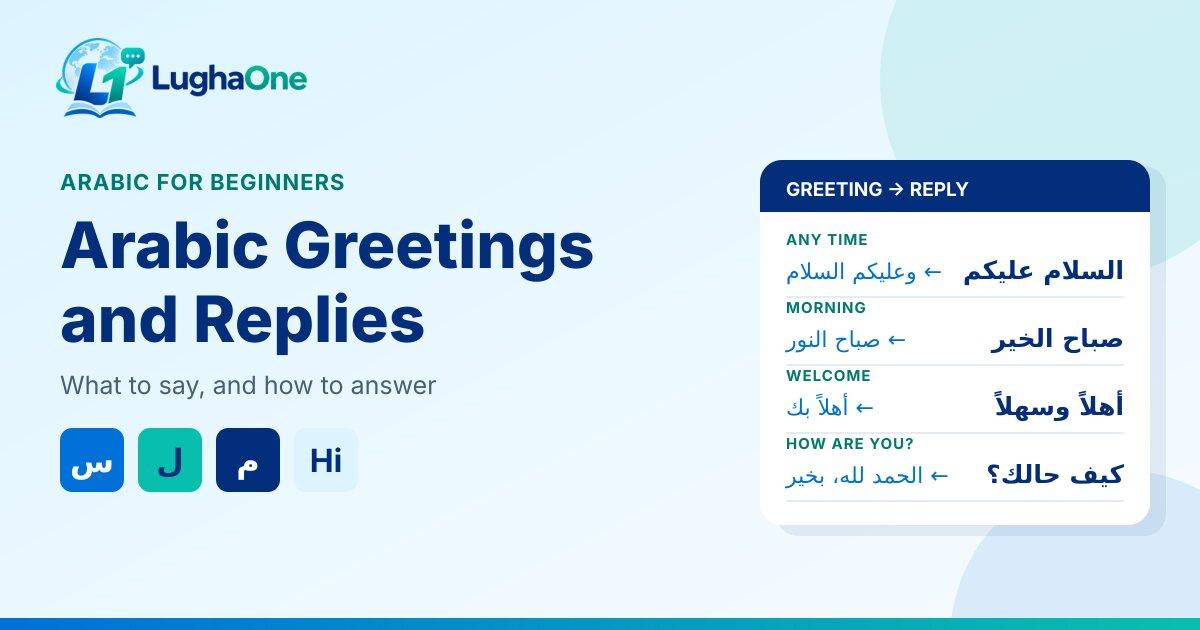
Arabic for Beginners
Arabic Greetings and Responses: What to Say and How to Reply
In Arabic, almost every greeting has a set reply. Learn the pairs for every time of day, how to ask how are you across the region, what to say on Ramadan and Eid, and the etiquette that goes with them.
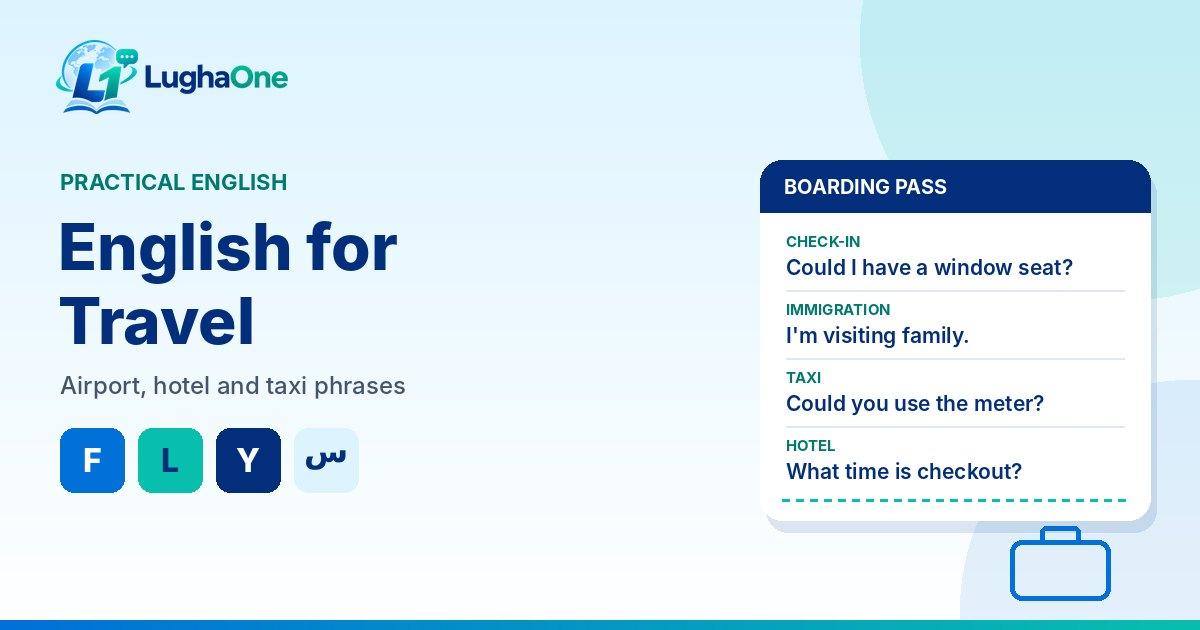
Practical English
English for Travel: Airport, Hotel and Taxi Phrases You Will Actually Use
The English you need from the check-in desk to your hotel room: short, polite phrases for every step of the trip, the questions officers ask, and easy fixes for common mistakes.
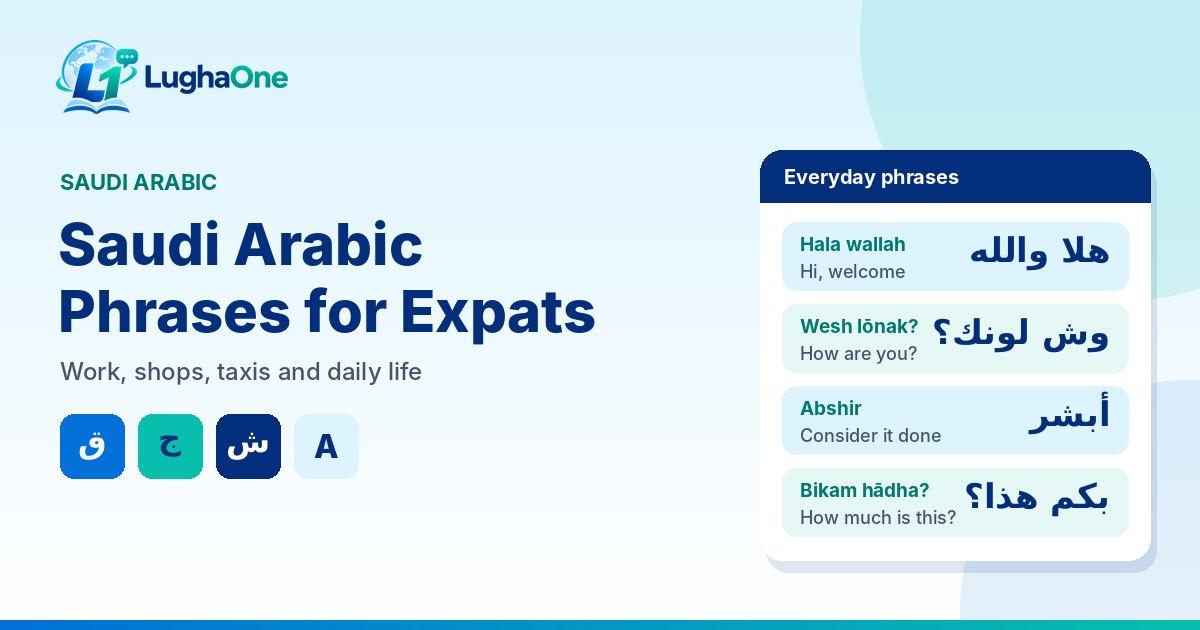
Arabic Dialects
Saudi Arabic Phrases for Expats: Work, Shops and Daily Life
The everyday Saudi Arabic you will hear in Riyadh, Jeddah and beyond, from hala wallah and abshir to bikam hadha, with simple notes on Najdi and Hijazi speech.
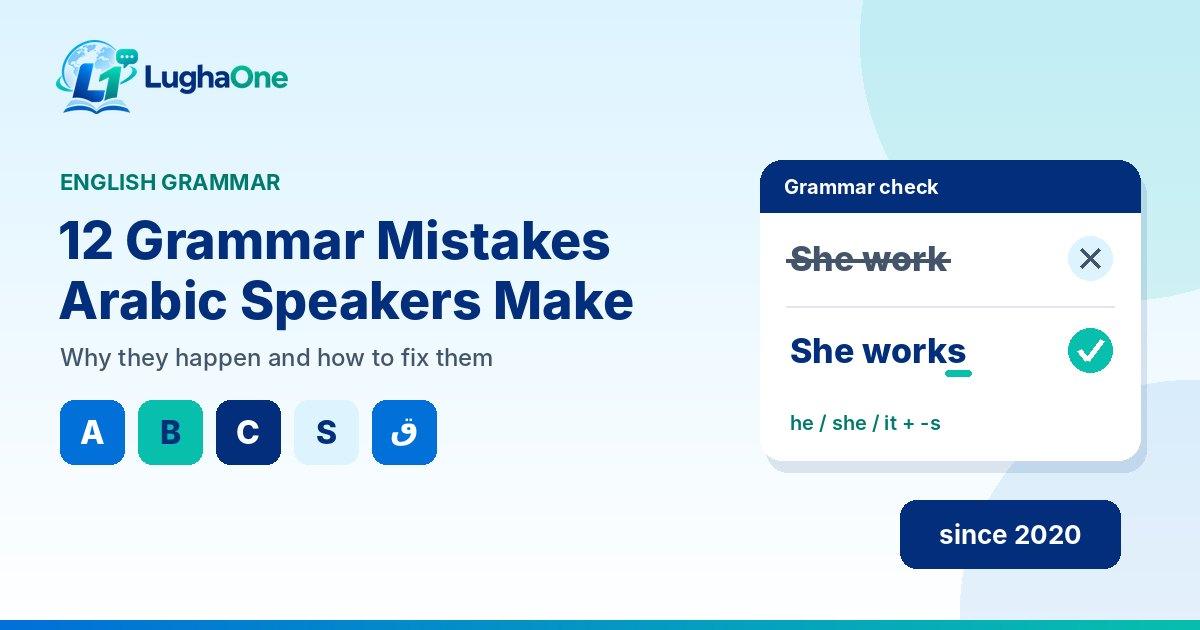
English Grammar
12 English Grammar Mistakes Arabic Speakers Make (and How to Fix Them)
Twelve grammar mistakes that come from thinking in Arabic while speaking English, why each one happens, and a simple correction you can start using today.
Business English
Business English Email Phrases: How to Write Clear, Professional Emails at Work
Ready-to-use phrases for every part of a work email, from the greeting to the sign-off, with a sample email you can adapt and the small mistakes that make emails sound less professional.
Business English
English Job Interview Questions and Answers: A Guide for Arabic Speakers
How to answer 'Tell me about yourself', 'Why should we hire you?' and other common interview questions in clear, confident English, with sample answers you can adapt.
Pronunciation
English Pronunciation for Arabic Speakers: Fix P/B, V/F and More
Why 'parking' turns into 'barking' and 'very' into 'fery', and simple daily drills that make your English clearer in meetings, interviews and travel.
English learning
How to Learn English from Zero: A Practical Beginner's Guide
Start speaking with confidence: the first phrases to learn, a 15-minute daily routine, beginner mistakes to avoid and a simple four-week plan.
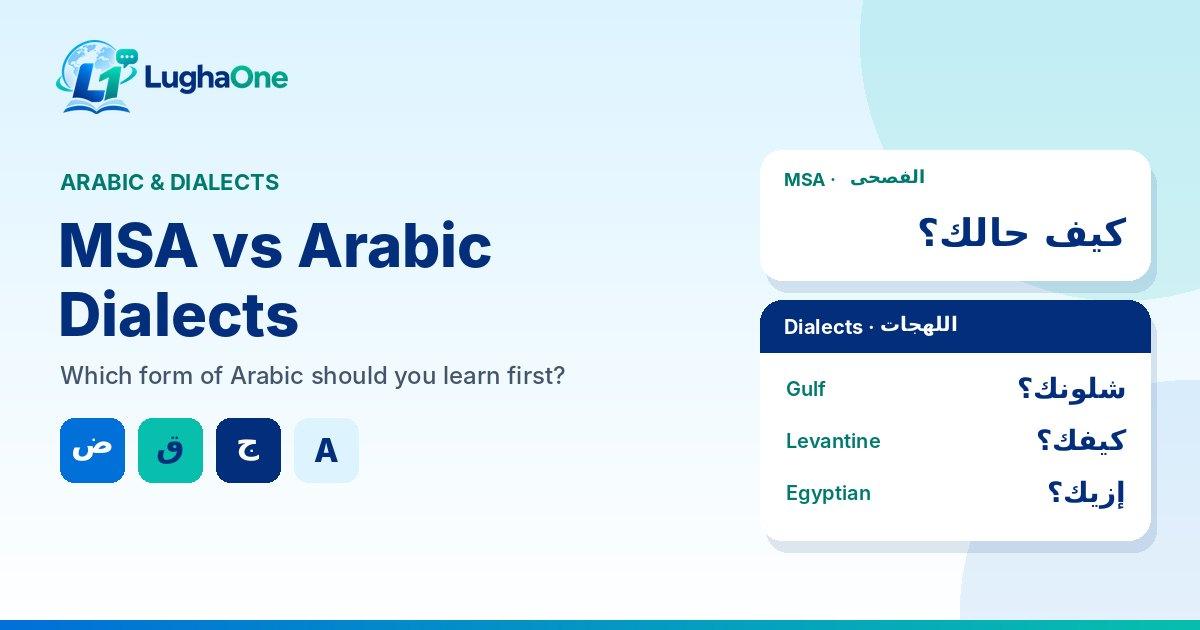
Arabic & dialects
Modern Standard Arabic vs. Arabic Dialects: Where Should You Start?
MSA or spoken Arabic? See how they differ in real examples, from 'How are you?' to the letter qaf, and choose the path that fits your goals.